Navigating a Wood-Destroying Insect Inspection: A Complete Guide for Brentwood Homeowners
Learn what happens during a wood-destroying insect (WDI) inspection, from crawlspace evaluations to official documentation, and how Brentwood homeowners can properly prepare.
Why Wood-Destroying Insect Inspections Matter
A Wood-Destroying Insect (WDI) inspection is an essential evaluation of a home's structural timber, designed to identify existing infestations, past damage, and conditions that could invite structural pests. In Middle Tennessee, where warm summers, mild winters, and ample rainfall create an ideal environment for subterranean organisms, these inspections are critical components of real estate transactions, mortgage approvals, and responsible home maintenance.
While standard home inspections evaluate the broad operational condition of a property—such as electrical panels, plumbing fixtures, and roofing shingles—a dedicated WDI inspection focuses exclusively on organisms that compromise wooden building elements. Identifying these pests before completing a purchase or before hidden activity spreads can prevent thousands of dollars in structural repairs down the road.
Target Organisms: What Inspectors Look For
Many homeowners assume a WDI inspection is solely a termite check. While subterranean termites are the primary target across the Southeast, licensed inspectors are trained to spot signs of several distinct wood-destroying species:
- Subterranean Termites: The most destructive wood-destroying pests in Tennessee. They live in underground colonies and build protective mud shelter tubes along foundation walls, sills, and framing to access cellulose materials.
- Carpenter Ants: Unlike termites, carpenter ants do not consume wood for nutrition; instead, they excavate smooth tunnels and galleries within moist, softening timbers to create nesting sites.
- Powderpost Beetles: The larvae of these wood-boring beetles feed inside hardwoods and softwoods over several years, eventually emerging as adults and leaving behind tiny, circular pinholes accompanied by fine, flour-like powder known as frass.
- Carpenter Bees: Typically found around exterior trim, fascia boards, unpainted decks, and porch ceilings, carpenter bees bore precise half-inch entry holes to construct brood chambers for their offspring.
Preparing Your Property for the Inspection
A thorough WDI inspection relies on direct visual observation. When key structural areas are blocked by personal belongings, inspectors must mark them as "inaccessible" on official reports, which can delay real estate closings or leave critical blind spots. Taking the time to prepare your home ensures a smooth, comprehensive assessment.
- Clear Crawlspace Access: If your home features a conventional foundation, ensure the crawlspace hatch is unlocked and unobstructed. Move landscaping, stored patio furniture, or heavy lids away from the opening.
- Provide Attic Clearance: Clear pathways beneath the attic scuttle or pull-down stairs. Move boxes, garments, or stored items away from the immediate perimeter framing of the attic.
- Move Items from Perimeter Walls: In basements and garages, move stacked bins, shelving, and workbenches at least a few inches away from interior foundation walls so framing timbers remain visible.
- Trim Overgrown Shrubs: Prune dense foundation plantings that press directly against the exterior foundation siding, allowing the inspector a clear sightline around the entire exterior perimeter.
- Secure Pets: Keep dogs and cats safely crated or off-site, as the inspector will need to move continually between the interior, exterior, crawlspace, and garage.
The Inspection Process: Area by Area
A systematic WDI inspection covers the entire structure, moving logically from the exterior perimeter to the darkest, lowest access points of the foundation.
The Exterior Foundation and Siding
The inspector starts outdoors, examining the boundary where the soil meets the foundation. They check brick veneer weep holes, stucco bands, and concrete masonry units for the presence of earthen mud tubes. They also evaluate wood-to-ground contact, such as exterior siding installed below the soil line, deck support posts resting directly in earth, or landscape mulch piled against sill plates. These conducive conditions create easy bridging points for subterranean pests.
Crawlspaces and Basements
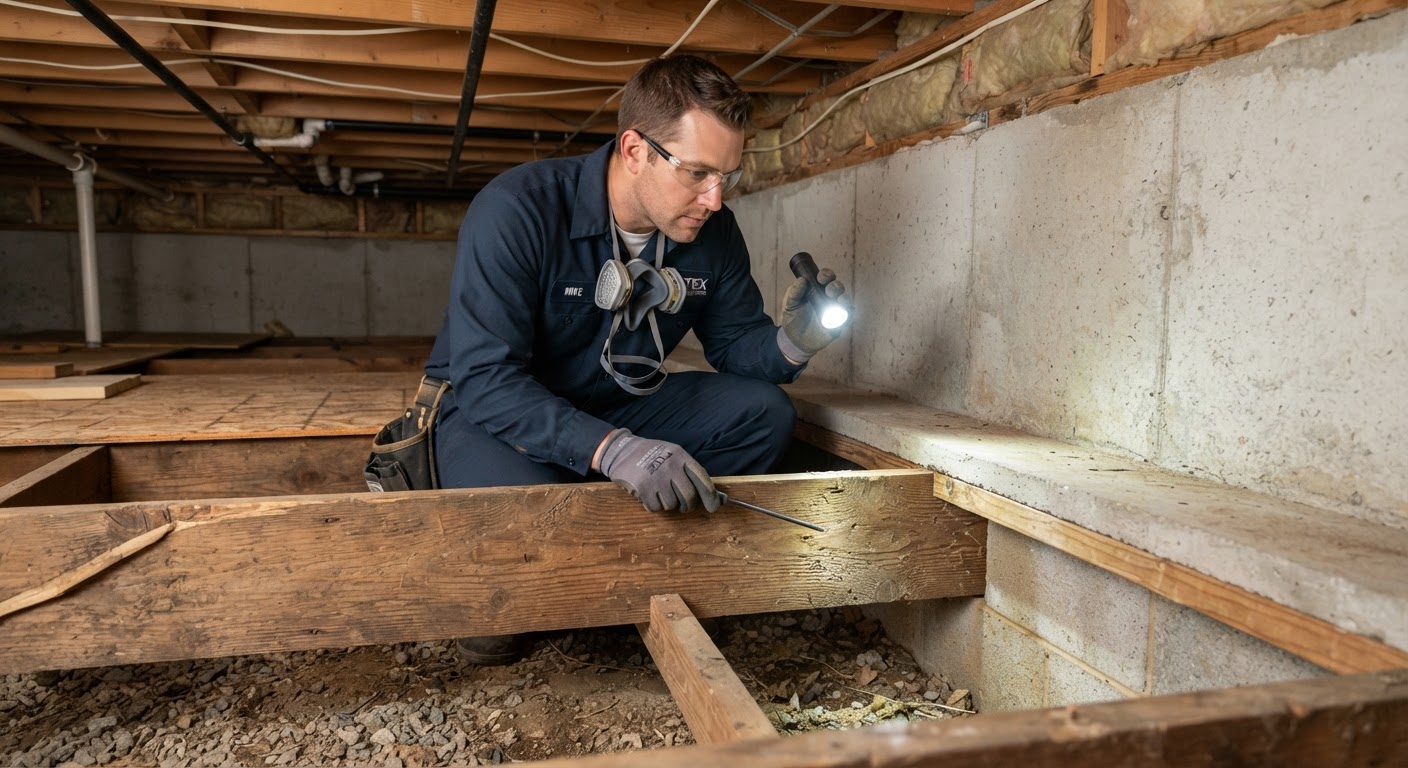
In Tennessee homes with crawlspaces or unfinished basements, this stage is often the most revealing. The inspector will check the mudsills, floor joists, rim joists, and subflooring using a bright flashlight and specialized sounding tools. By gently tapping structural timbers with a probe or small mallet, the inspector listens for hollow resonances that indicate interior damage. They also look for damp subflooring near plumbing runs and inspect masonry piers for exploratory termite tunnels.
Interior Living Spaces
Inside the living quarters, inspectors examine areas where wood framing meets exterior walls or plumbing connections. They look for blistering paint, pinholes in drywall, sagging trim, springy floorboards, and warped door frames. Inspectors pay close attention to baseboards in bathrooms, laundry rooms, and kitchens, where latent moisture leaks can attract opportunistic insects.
Attics and Roof Framing
While subterranean termites travel upward from the soil, roof framing can host carpenter bees, drywood species (occasionally transported via imported lumber or furniture), and carpenter ant nests associated with historic roof leaks. Inspectors scan rafters, ridge boards, and ceiling joists for moisture staining, sawdust-like frass piles, and exit holes.
Understanding the Inspection Report
Following the inspection, the findings are documented on a standardized Wood-Destroying Insect Information Report (often referenced in real estate as the NPMA-33 form or state-specific documentation). Understanding the distinctions in this report is vital:
- No Evidence Observed: Indicates that no visible evidence of active or past wood-destroying insect activity was detected in accessible areas at the time of inspection.
- Active Infestation: Live insects or newly constructed mud tubes were discovered, necessitating an appropriate control treatment.
- Previous Infestation / Evidence of Previous Treatment: Old, inactive galleries, drill marks on concrete slabs, or bait stations around the perimeter indicate past activity or defense measures. If no active insects are found, structural repairs or supplemental monitoring may be all that is recommended.
- Inaccessible Areas: Highlights spaces that could not be visually confirmed, such as finished basement walls, vaulted ceilings, or heavily insulated crawlspaces.
- Conducive Conditions: Points out environmental factors—such as standing water in a crawlspace, leaking gutters, or firewood stacked against the house—that should be corrected to reduce future infestation risks.
Next Steps If Pests or Damage Are Found
Discovering evidence of wood-destroying insects can feel alarming, but finding it during an inspection allows you to address the problem proactively. If active pests are documented, the first step is to implement a targeted treatment plan tailored to the specific insect identified. For subterranean termites, this may include liquid perimeter applications, localized interior treatments, or non-invasive baiting installations.
If physical damage is noted, a qualified licensed contractor should assess whether the affected timbers retain their structural integrity or require sistering, reinforcement, or replacement. Once the immediate infestation is controlled and repairs are complete, maintaining an ongoing inspection and preventive treatment plan ensures your home remains secure against future incursions.
Schedule Your Pest Inspection with Granite Finch Pest Control
Whether you are purchasing a new home in Brentwood, preparing your property for the market, or simply ensuring your current residence is protected, a thorough inspection provides essential clarity. Granite Finch Pest Control delivers meticulous, professional termite and wood-destroying insect evaluations designed to safeguard your investment. Contact us today to schedule your comprehensive residential inspection.
Need help from Granite Finch Pest Control?
Contact our team to discuss your service needs in Brentwood and surrounding service areas.