Identifying the Brown Recluse: Habitat Preferences and Key Markings in Middle Tennessee
Learn how to accurately identify the brown recluse spider, distinguish it from common Middle Tennessee look-alikes, and understand the indoor habitats where it thrives.
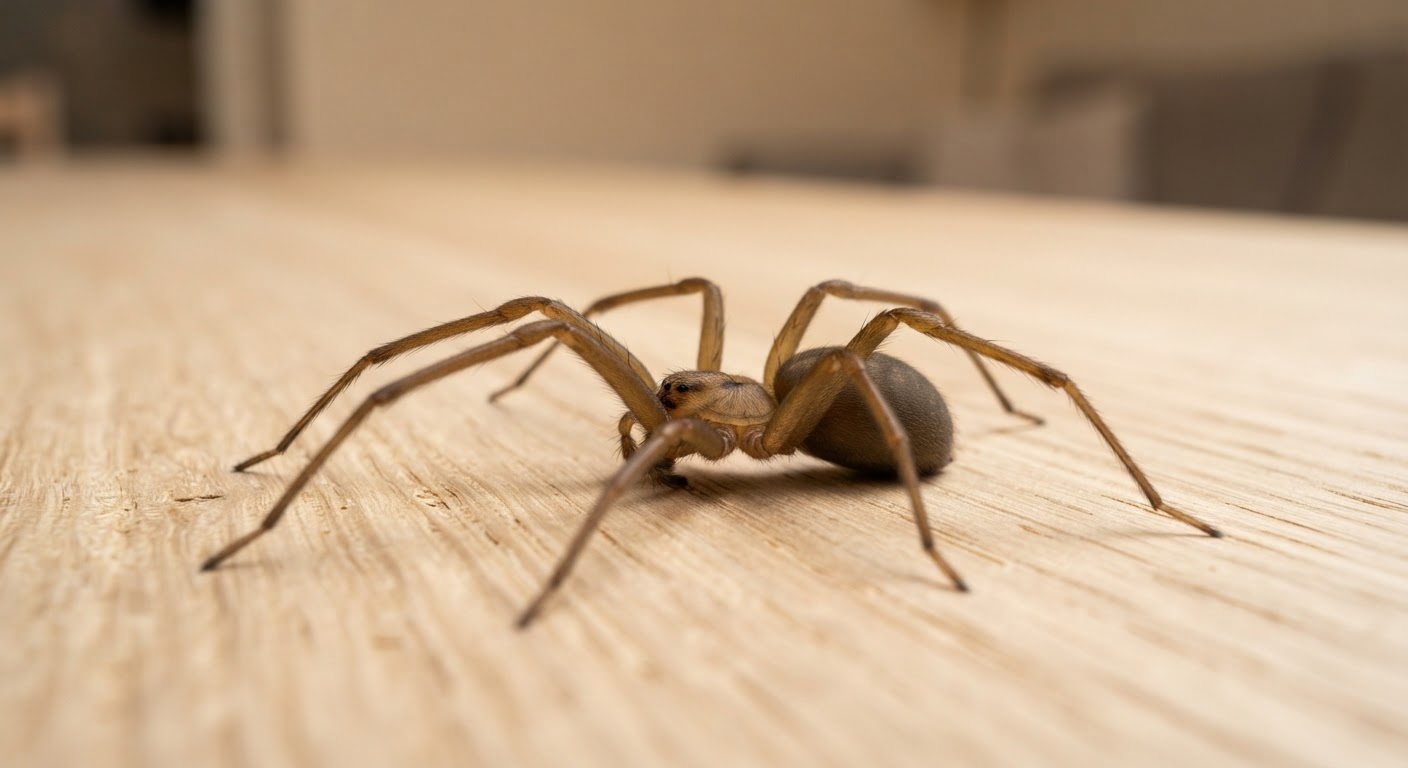
Few domestic pests generate as much anxiety among homeowners in Middle Tennessee as the brown recluse spider (Loxosceles reclusa). Middle Tennessee sits well within the native geographic range of the brown recluse, making encounters relatively common in residential neighborhoods across Brentwood and the surrounding areas. Despite their widespread presence, significant misinformation surrounds both their appearance and behavior. Many harmless house spiders are routinely misidentified as recluse spiders, while genuine infestations can sometimes go undetected until populations become well established.
Understanding the actual physical traits of the brown recluse and recognizing their preferred nesting zones inside a house is the most reliable way to mitigate risk and maintain a secure living environment.
Key Distinguishing Features of the Brown Recluse
The brown recluse is frequently misidentified because many people rely solely on coloration or a vague impression of the famous "violin" marking. To confirm whether a specimen is truly a brown recluse, one must look at a combination of distinct anatomical features.
1. The Eye Pattern: Three Pairs Instead of Eight
The single most definitive identifying feature of the brown recluse is its eye arrangement. Most common spiders found in Tennessee possess eight eyes arranged in two rows of four. The brown recluse, along with other members of the genus Loxosceles, has only six eyes arranged in three distinct pairs (dyads) across the front of the head. There is one central pair and a lateral pair on each side, forming a small semicircular pattern. While examining eye patterns requires a close look or a magnifying lens, it is the most reliable biological indicator.
2. The Cephalothorax and the "Fiddle" Shape
Located on the cephalothorax—the fused head and thorax region—is a dark, violin-shaped marking. The wide base of the violin begins near the eyes, with the "neck" pointing backward toward the abdomen. However, this marking can vary significantly with age. Mature spiders usually have a pronounced, dark pattern, while younger spiders may have faint or indistinct markings. Because several harmless species also have dark streaks on their cephalothorax, this feature should never be used as the sole point of identification.
3. Uniform Coloration and Lack of Spines
Unlike many common spiders that display bands, rings, or contrasting spots, the legs and body of the brown recluse exhibit a remarkably uniform coloration:
- Legs: Smooth and uniformly colored, ranging from light tan to dark brown, completely devoid of stripes, dark bands, or prominent stiff spines. They are covered in very fine, short hairs rather than bristly barbs.
- Abdomen: Oval, smooth, and uniformly colored grayish-brown to dark brown without any stripes, chevrons, or spots. The abdomen's tone can darken depending on when the spider last fed.
- Size: An adult brown recluse is typically about the size of a quarter, including its leg span, with a body length measuring roughly one-quarter to one-half inch.
Common Look-Alikes in Middle Tennessee
Many common household spiders in Brentwood are frequently mistaken for brown recluses. Knowing the differences can save homeowners unnecessary stress:
- Wolf Spiders (Lycosidae): Wolf spiders are robust, hairy ground hunters. Unlike the brown recluse, wolf spiders have distinct patterns, thick bristles on their legs, and eight eyes with two very large, prominent forward-facing eyes. They are generally much larger and faster than recluse spiders.
- Cellar Spiders (Pholcidae): Often called "daddy longlegs," cellar spiders have extremely long, thin, fragile legs and small bodies. They build extensive, tangled webs in corners and actively vibrate when disturbed, a behavior not shared by the recluse.
- Southern House Spiders (Kukulcania hibernalis): The male southern house spider looks remarkably similar to a brown recluse due to its light brown color and long legs. However, southern house spiders have eight eyes, very long sensory mouthparts (pedipalps) that project forward like an extra set of small legs, and lack the distinctive violin marking.
Habitat Preferences: Where They Hide Indoors
True to their name, brown recluse spiders are naturally reclusive and avoid light and high-traffic areas. They are nocturnal hunters that search for dead or living prey under the cover of darkness. During the day, they retreat into quiet, dry, undisturbed microclimates.
Attics and Crawlspaces
Attics in Middle Tennessee offer an ideal habitat for brown recluse spiders. They are warm for much of the year, dark, and filled with undisturbed structural framing and insulation. Crawlspaces, especially those that are dry or encapsulated, provide similar shelter where spiders can navigate joists and sill plates without human interference.
Cardboard Storage and Closets
Cardboard boxes simulate the layered dead bark and rock crevices where brown recluses naturally shelter outdoors. The corrugated fluting of cardboard boxes provides countless narrow voids for daytime nesting. As a result, long-term storage closets, basements, and garages filled with packed belongings are primary harborages.
Wall Voids and Trim
Recluse spiders readily exploit the narrow spaces behind baseboards, crown molding, door frames, and inside drywall voids. They can enter living quarters by traveling behind trim work, slipping through unsealed electrical faceplates, or emerging around plumbing penetrations beneath sinks.
Irregular Webbing Habits
Unlike orb-weavers that spin symmetrical, circular webs to snare flying insects, the brown recluse produces irregular, off-white, tangled webbing. These webs are not primarily designed to catch prey out in the open; rather, they serve as daytime retreats, resting mats, and protective covers for egg sacs hidden deep within cracks and crevices.
Practical Steps to Minimize Brown Recluse Encounters
Because brown recluses are shy and bite almost exclusively in defense when pressed against human skin, simple domestic precautions can greatly lower the chance of an accidental bite:
- Shake out clothing and footwear: Shoes left in closets, work boots kept in garages, and clothing stored on the floor should always be checked and vigorously shaken before dressing.
- Transition to plastic storage bins: Replace cardboard moving boxes with heavy-duty plastic storage containers equipped with secure, latching lids to eliminate nesting opportunities in stored goods.
- Pull beds away from walls: Keep bed frames at least a few inches away from walls and avoid allowing bedskirts or comforters to touch the floor, preventing spiders from wandering into sleeping areas.
- Inspect and reduce clutter: Regularly clear out piles of unused clothing, paper goods, and disorganized storage areas where spiders can hide undetected.
- Seal access points: Caulk gaps around baseboards, seal pipe penetrations under vanities, and install weather stripping along exterior doors to restrict their interior movement.
Professional Management and Integrated Control
Managing brown recluse spiders requires a targeted, systematic approach. Over-the-counter aerosol "bug bombs" or foggers are largely ineffective against recluse populations; the airborne mist rarely penetrates into the deep wall cavities, insulation, or tightly packed boxes where the spiders hide. Worse, the irritating residues can scatter the spiders throughout the house, increasing the likelihood of human encounters.
Long-term control relies on integrated pest management that addresses the broader insect populations the spiders feed upon, combined with focused structural treatments, targeted crack-and-crevice applications, and persistent monitoring using adhesive traps. If you suspect brown recluse activity in your Brentwood home, contact Granite Finch Pest Control for a thorough property evaluation and a tailored residential defense plan.
Need help from Granite Finch Pest Control?
Contact our team to discuss your service needs in Brentwood and surrounding service areas.