The Vulnerable Perimeter: How Rodents Exploit Utility Lines and Siding in Brentwood Homes
Mice and rats need astonishingly little space to enter a home. Learn how utility pipe penetrations, HVAC conduits, and subtle siding gaps provide the primary pathways for rodent infestations in Middle Tennessee homes.
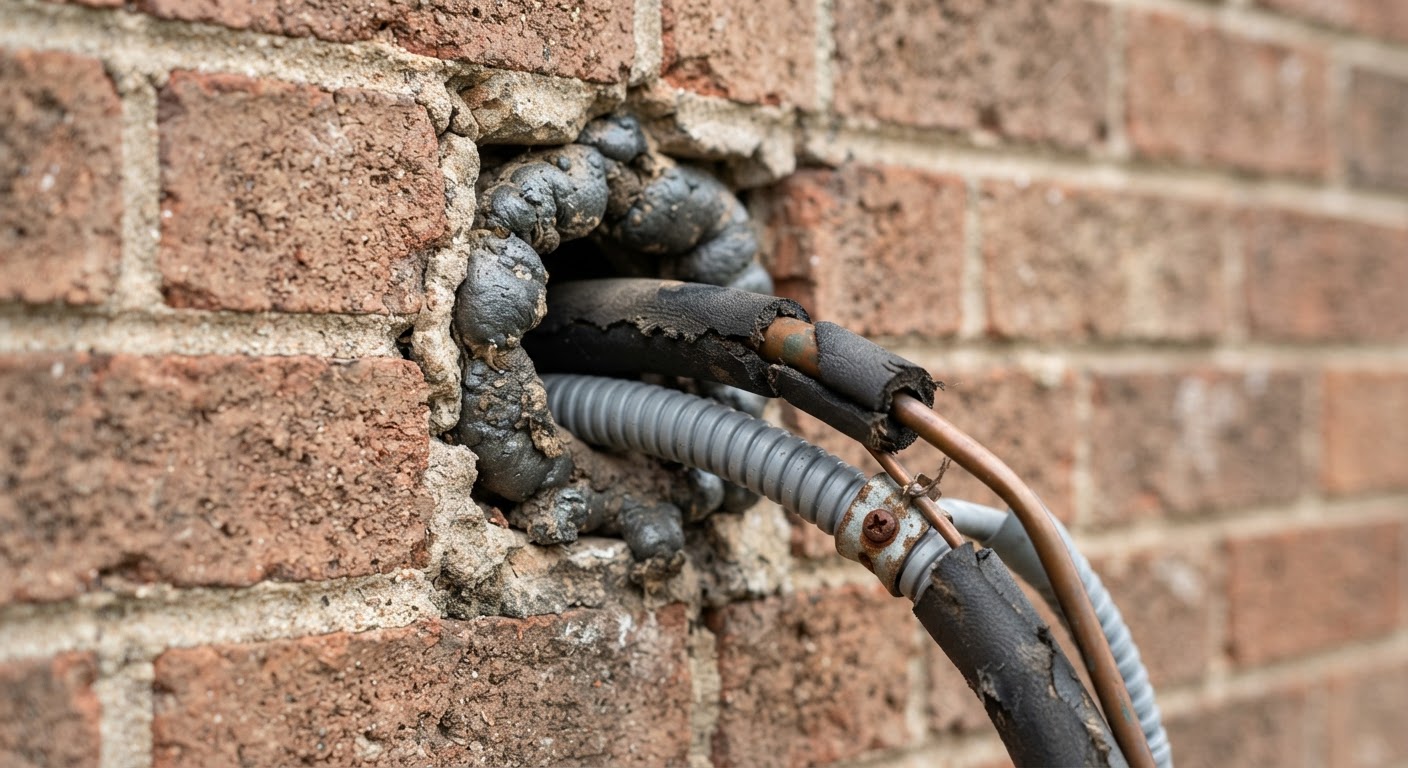
When homeowners think about rodents entering their living spaces, they often picture an open garage door, a damaged basement window, or an aging crawlspace door left ajar. While those obvious entry points certainly present risks, the vast majority of rodent invasions begin much more quietly. Mice and rats rarely require a wide-open door; instead, they exploit structural vulnerabilities so small they often go unnoticed by the untrained eye.
In Brentwood and throughout Middle Tennessee, where architectural styles frequently blend brick veneer, fiber cement siding, and complex multizone HVAC configurations, exterior perimeters are filled with structural transitions. Each time a pipe, wire, or line set cuts through an exterior wall, it creates a potential superhighway into wall voids, crawlspaces, and attics. Understanding how rodents identify, reach, and widen these gaps is the first step in establishing a truly rodent-resistant home.
The Physical Abilities of Common Commensal Rodents
To grasp why small gaps present such a significant liability, it helps to understand the physical mechanics of the house mouse (Mus musculus) and the Norway or roof rat (Rattus norvegicus and Rattus rattus). These animals are built for compression and exploration.
- Skeletal Flexibility: A mature mouse can squeeze through an opening measuring just one-quarter of an inch in diameter—roughly the width of an ordinary pencil or the size of a dime. A rat can easily slip through a hole the size of a quarter. Their rib cages are flexible, meaning that if a rodent's skull can clear an opening, the rest of its body will easily follow.
- Persistent Gnawing: Rodent incisors grow continuously throughout their lives. To keep them sharp and prevent overgrowth, rodents constantly gnaw on materials of varying densities. Exterior materials like standard expanding foam, weatherstripping, wood, vinyl, and even soft mortar cannot withstand focused rodent chewing.
- Agility and Climbing: Roof rats, in particular, are exceptional climbers capable of scaling rough brick, trellis structures, downspouts, and utility cables to reach high-elevation siding gaps and roof transitions. Mice are equally adept at shimmying up vertical corner trims and interior framing studs.
Common Utility Penetrations That Invite Intruders
Modern homes rely on an intricate network of plumbing, gas, electrical, and refrigerant lines. While tradespeople install these systems according to mechanical codes, those codes do not always account for pest exclusion. Installers frequently core an opening larger than the pipe itself to allow for vibration, expansion, and ease of installation, leaving surrounding voids behind exterior escutcheons or cover plates.
HVAC Line Sets
Heating and cooling line sets are among the most common rodent entry points in residential neighborhoods. The bundle connecting an outdoor condenser unit to the indoor air handler includes copper refrigerant piping, insulated foam sleeves, and low-voltage electrical wiring. Over time, the soft black foam insulation weathers and deteriorates under UV light. Rodents chew through this soft material both to use it as nesting substrate and to trace the line directly through the exterior wall envelope.
Outdoor Spigots and Plumbing Bibs
Hose bibs penetrating exterior brick or siding frequently have irregular openings cut into the sheathing behind them. If the exterior flange is not mechanically fastened flush against a solid substrate with proper backing, rodents can detect the air currents escaping from the interior and squeeze around the water line.
Gas Supply Lines and Electrical Conduits
Gas pipes feeding outdoor kitchens, generators, or main utility meters frequently penetrate the foundation or band joist. Installers often fill the perimeter of these metal pipes with silicone caulk or standard spray foam. As the home settles and temperatures cycle between humid summers and freezing winters, caulk dries and shrinks, while basic spray foam easily crumbles under rodent teeth.
Siding Flaws and Architectural Transition Gaps
Beyond utility penetrations, the architectural detailing of many homes creates subtle channels that rodents navigate with ease. Exterior cladding is designed to shed water and allow building components to breathe, but without proper pest-proofing, these features double as structural gaps.
Corner Trim and J-Channels
Vinyl and fiber cement siding systems rely on corner posts, trims, and J-channels to receive siding planks and provide a finished edge. The vertical void behind an exterior corner post often acts as a concealed ladder. A mouse can duck underneath the corner trim near the foundation and climb entirely out of sight between the cladding and house wrap until it finds an opening into the attic or an upper-floor band joist.
Brick Weep Holes and Mortar Flaws
Brick veneer homes feature weep holes—narrow vertical gaps left in the bottom course of brick—to allow moisture behind the masonry to escape. While vital for drainage and ventilation, an open weep hole is an open door for mice. Additionally, minor voids where mortar has washed out or cracked provide enough purchase for rodents to climb or chew their way into the drainage cavity behind the brick.
The Band Joist Junction
Where a home’s wooden framing rests atop the concrete foundation wall—the sill plate and band joist—there is often an imperceptible overhang of siding. If the siding does not terminate tight against an insect screen or metal flashing, rodents can climb the concrete foundation wall beneath the siding edge and access the subfloor framing.
How Rodents Locate These Hidden Entrances
Rodents do not search randomly; they rely on sensory cues that lead them directly to hidden utility gaps and siding voids:
- Thermal Drafts: In cooler weather, warm interior air escapes through unsealed wall penetrations. Rodents possess acute thermal sensitivity and follow these warm air plumes straight to the source. In summer, the reverse occurs when conditioned air escapes into crawlspace voids.
- Air Pressure and Odor Trails: Homes breathe, creating stack effect currents. Rodents detect food odors, moisture, and the scent of previous pest activity drifting through exterior wall cavities.
- Thigmotaxis (Wall-Following Behavior): Rodents prefer to move while maintaining physical contact with vertical surfaces. As they skirt along foundation walls or behind landscaping shrubs, they naturally bump into utility lines and corner trims, prompting immediate investigation.
Professional Exclusion: Sealing Gaps the Right Way
Homeowners often attempt to solve these issues using off-the-shelf aerosol foam cans. Unfortunately, cured polyurethane foam is porous, brittle, and effortless for a rodent to chew through within hours. Effective pest exclusion demands materials and methods designed specifically to resist physical gnawing and environmental degradation.
- Heavy-Gauge Hardware Cloth: Woven or welded galvanized steel wire mesh (typically 1/4-inch or 1/8-inch) is ideal for backing large openings, crawlspace vents, and wide pipe voids before sealing.
- Stainless Steel or Copper Mesh: Unlike steel wool, which rusts and stains exterior surfaces when exposed to rain, copper or stainless steel mesh does not corrode. Packed tightly into gaps around pipes, it creates a barbed, abrasive barrier that rodent teeth cannot penetrate.
- Elastomeric Sealants and Mortar: Once mechanical barriers like metal mesh or hardware cloth are seated, high-grade elastomeric sealants, hydraulic cement, or polyurethane compounds are applied over the top to eliminate air drafts and moisture infiltration.
- Specialized Weep Hole Covers: Installing stainless steel weep hole inserts allows moisture to drain and air to circulate while presenting an impassable barrier to rodents and insects.
Protecting Your Perimeter
Addressing utility penetrations and siding transitions is one of the most durable investments you can make in maintaining a pest-free home. While traps and interior treatments manage an active population, true long-term relief requires sealing the perimeter so new invaders cannot enter.
If you suspect rodents have found an entry point around your exterior piping, siding, or foundation line, Granite Finch Pest Control can help. Our team thoroughly inspects exterior perimeters and delivers targeted rodent control and exclusion solutions tailored specifically to the design and construction of homes in Brentwood.
Need help from Granite Finch Pest Control?
Contact our team to discuss your service needs in Brentwood and surrounding service areas.