Securing Brick Weep Holes: Balancing Wall Ventilation with Rodent and Insect Defense
Brick weep holes protect your home from moisture damage, but they also serve as open highways for mice, roaches, and spiders. Learn how to secure them without trapping moisture inside your walls.
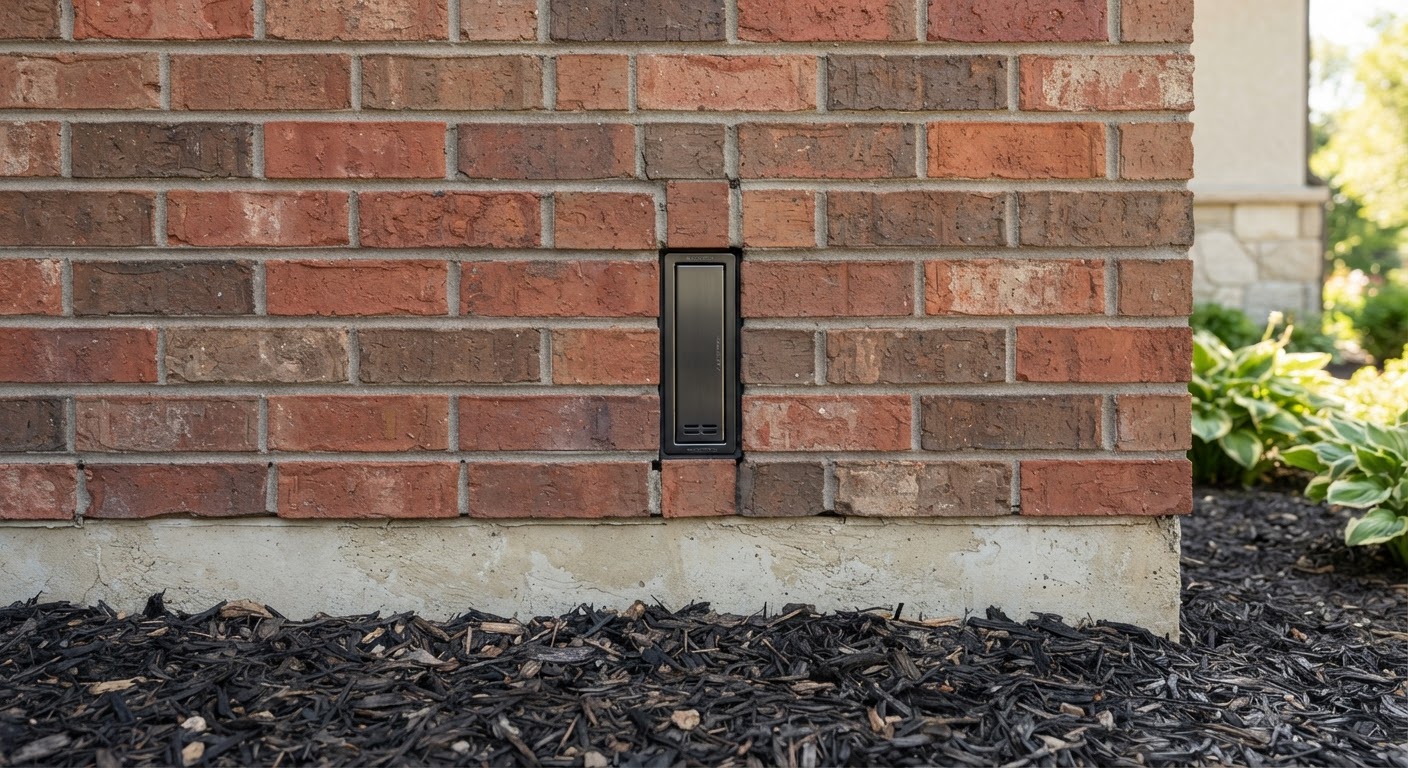
Brick masonry is one of the most durable and visually appealing exterior finishes found on homes across Brentwood. From stately custom builds to classic suburban neighborhoods, brick provides exceptional structural resilience and curb appeal. However, many homeowners are surprised to learn that brick is not waterproof. In fact, exterior brick functions as a porous veneer rather than a solid barrier against moisture. Because brick absorbs water during rainfall, modern construction relies on an internal drainage plane and small, intentional openings along the bottom course of masonry known as weep holes.
While weep holes are vital to preserving the structural integrity of your exterior framing, they also present an open invitation to regional pests. Without proper protection, these gaps serve as unimpeded highways for mice, rats, spiders, and wood-destroying insects seeking shelter in your wall cavities.
The Purpose of Brick Weep Holes
To understand why weep holes are so attractive to pests, it helps to understand how brick veneer walls function. When rain strikes a brick facade, moisture penetrates the masonry. Builders install a drainage gap, or air space, between the back of the brick and the home's interior wood framing and sheathing. A water-resistive barrier covers the sheathing to prevent liquid water from reaching the interior framing.
Moisture running down the drainage cavity pools at the base of the wall, where flashing directs it outward. Weep holes—typically spaced every few bricks along the lowest course of masonry and above windows and doors—allow this accumulated water to exit the building. In addition to drainage, weep holes facilitate air circulation inside the wall cavity, allowing damp components to dry out and preventing fungal rot, mildew, and structural deterioration.
Why Weep Holes Attract Pests
A standard weep hole is roughly three-eighths to one-half of an inch wide and several inches tall. From an insect or rodent's perspective, this opening is a grand entryway into a temperature-controlled sanctuary protected from wind, rain, and predators.
Mice and Small Rodents
Mice need an opening no larger than a dime—roughly one-quarter of an inch—to squeeze inside a structure. A standard, open weep hole provides more than enough room for a field mouse or house mouse to pass through directly. Once inside the wall cavity, rodents find fiberglass insulation, which offers ideal nesting material, along with protected avenues to travel upward into attics or downward into crawlspaces.
Crawling and Nesting Insects
Middle Tennessee is home to a variety of persistent crawling pests that naturally seek dark, sheltered crevices. Open weep holes frequently harbor:
- Brown Recluse Spiders: These solitary arachnids thrive in undisturbed, dry wall voids and can establish breeding populations hidden from view.
- Cockroaches: Species like the American and Oriental cockroach favor the damp, shadowed microclimate found behind lower brick courses.
- Wasps and Mud Daubers: Queen wasps searching for spring nesting sites often utilize weep gaps to build nests inside the wall void, creating stinging hazards near entryways.
- Ants: Opportunistic ant colonies will exploit weep holes to access interior framing and kitchen wall lines.
Termite Vulnerabilities
Subterranean termites require continuous protection from light and dry air. When foundation plantings, mulch beds, or soil levels rise too close to weep holes, termites can construct shelter tubes directly into the brick cavity, bypassing the exposed concrete foundation where their activity would otherwise be spotted during a routine inspection.
The Critical Mistake: Sealing Weep Holes Shut
When homeowners discover that pests are entering through weep holes, their first instinct is often to reach for a caulking gun, a can of expanding foam, or a trowel of mortar. Permanently sealing weep holes is one of the costliest exterior maintenance mistakes a homeowner can make.
Closing off weep holes disrupts the engineered drainage and ventilation of your exterior walls. When water enters the brick during sustained storms, it becomes trapped in the wall cavity. Over time, trapped moisture leads to:
- Rotting sill plates, studs, and exterior wood sheathing.
- Persistent mold and mildew growth behind drywall.
- Efflorescence and spalling, where trapped water freezes, expands, and breaks apart the brick surface.
- Musty interior odors that are difficult to locate and eradicate.
Furthermore, soft materials like expanding spray foam are no match for rodents. Mice and rats can chew through polyurethane foam in a matter of minutes, leaving an unsightly, ruined opening that still allows pest access while simultaneously inhibiting proper water drainage.
Effective Exclusion: How to Protect Weep Holes Properly
The goal of weep hole exclusion is simple: stop pests while allowing free airflow and water drainage. Achieving this balance requires materials designed specifically for masonry retrofits.
Stainless Steel Weep Hole Covers
Manufactured weep hole inserts made from spring-grade stainless steel are the industry standard for durability and effectiveness. These inserts feature a series of fine grates or ribs that compress to fit tightly within the mortar gap. The spring tension holds the device firmly in place without requiring adhesives, fasteners, or mortar. Because they are made from heavy-gauge stainless steel, rodents cannot chew through them, and the metal will not rust or discolor the surrounding brick over time.
Corrosion-Resistant Wire Mesh
For non-standard or irregular weep gaps where pre-formed inserts do not seat securely, professionals often use heavy-gauge, corrosion-resistant mesh woven from stainless steel or copper. Rolled and inserted deep into the opening, this material forms an impenetrable barrier to rodents and larger insects while letting water trickle out freely. Coarse steel wool should be avoided, as standard carbon steel quickly rusts when exposed to moisture, leaving severe orange stains down your foundation.
Managing the Perimeter Around Weep Holes
Physical inserts are the cornerstone of weep hole defense, but exterior surroundings also play a major role in keeping pests away from these ground-level openings.
Maintain Proper Ground Clearances
Building codes generally require at least four to six inches of exposed foundation between the soil level and the bottom of the brick veneer. In Brentwood neighborhoods where heavy landscaping is common, it is easy for mulch layers to accumulate year after year until they reach or cover the weep holes. Never allow mulch, topsoil, or decorative gravel to bury or touch weep openings. Buried weep holes cannot drain properly and create an invisible subterranean highway for termites and moisture.
Trim Vegetation
Dense shrubbery, decorative grasses, and groundcover planted directly against the foundation cast continuous shade, slowing evaporation and creating a damp zone that attracts insects and rodents. Keep foliage trimmed back at least twelve inches from the brick facade to promote airflow and allow sunlight to dry the foundation perimeter.
Eliminate Standing Water
Ensure that downspout extensions discharge water several feet away from the foundation line. Saturated soil at the base of the brick increases relative humidity inside the wall cavity and draws pests toward the moisture source.
Protect Your Home from Hidden Wall Invasions
Addressing brick weep holes is an essential element of a thorough exterior pest exclusion strategy. By reinforcing these drainage gaps with purpose-built, rodent-proof materials, you safeguard your living spaces and insulation while maintaining the critical airflow your home needs to stay dry and structurally sound. Granite Finch Pest Control provides thorough exterior evaluations and targeted exclusion methods to keep your Brentwood home secure from rodents, termites, and crawling pests year-round.
Need help from Granite Finch Pest Control?
Contact our team to discuss your service needs in Brentwood and surrounding service areas.