Red Clay and Heavy Rains: How Middle Tennessee Topography Drives Subterranean Termite Movement
Middle Tennessee's dense clay soils and seasonal downpours create unique subterranean conditions that directly influence how termites navigate, forage, and breach residential foundations.
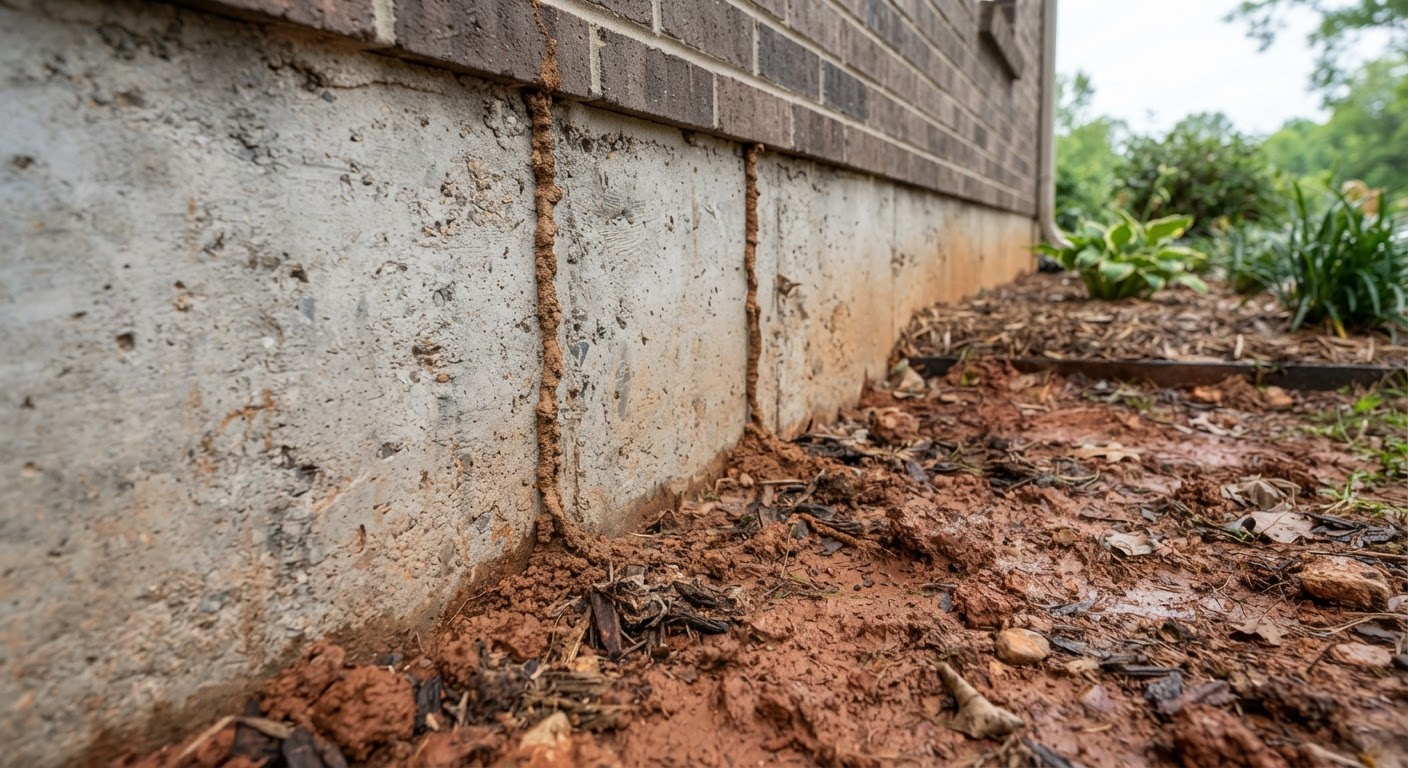
Beneath the manicured lawns and wooded landscapes of Brentwood and the broader Middle Tennessee region lies a geological profile that significantly dictates insect behavior. Homeowners often recognize subterranean termites as silent structural pests, yet few realize how intensely these wood-destroying insects are governed by the earth itself. The interaction between heavy regional clay, rolling topography, and sudden seasonal rainfall creates a dynamic subterranean ecosystem, dictating where colonies establish themselves, how they navigate, and when they seek refuge within structural timbers.
The Unique Properties of Middle Tennessee Clay Soils
The predominant soil across the Nashville Basin and surrounding Highland Rim is dense, fine-textured clay. Unlike loose, sandy loam, clay soils consist of tightly packed microscopic particles that behave radically differently when subjected to water and seasonal temperature shifts.
Clay possesses an immense water-holding capacity. When dry, it hardens into an almost impenetrable crust, frequently cracking into deep fissures as moisture evaporates. When wet, clay expands significantly, trapping moisture for prolonged periods while restricting airflow. For the eastern subterranean termite (Reticulitermes flavipes)—the primary species encountered in our area—these soil mechanics represent both an obstacle and an ideal habitat.
Subterranean termites possess delicate, soft bodies prone to rapid desiccation. They require continuous access to high humidity—often 90 percent or higher—to survive outside their nest. The moisture-retentive nature of clay provides a consistent, protective buffer against dry surface weather, allowing colonies to thrive deep in the subterranean strata even during sweltering summer stretches.
Rainfall Patterns and Hydraulic Pressure Shifts
Middle Tennessee regularly experiences heavy, concentrated precipitation events, particularly during the transition months of late winter, spring, and early summer. When inches of rain fall over a short window, the absorption threshold of regional clay is quickly surpassed.
Because water infiltrates clay slowly, heavy downpours saturate the top few inches before pooling or generating rapid surface runoff. Underground, this saturation shifts the water table temporarily and fills the microscopic pore spaces within the soil. For subterranean termites tunneling beneath the surface, saturated soil presents an immediate hazard: drowning or suffocation.
As water tables surge and ground voids flood, termite colonies adjust their foraging pathways. Workers cannot maintain open tunnels through liquified or waterlogged soil. Consequently, heavy rain events drive termites to do two things:
- Migrate Upward: Foraging workers move vertically away from flooded subsoils, seeking elevated, drier ground near the soil surface, rock outcroppings, or building perimeters.
- Exploit Structural Boundaries: Water naturally collects against impervious obstacles, such as concrete foundation footings, crawlspace stem walls, and retaining walls. As termites flee saturated ground, these vertical structural transitions offer both drainage relief and an escape path above the water line.
How Brentwood Topography Influences Subterranean Runoff
Brentwood is defined by undulating hills, ridges, and valleys. While this rolling topography provides scenic views, it fundamentally alters how groundwater moves around residential properties.
On sloped lots, surface water and subsurface hydraulic flow move downhill toward natural drainage paths. If a home is constructed cut into a slope or situated at the base of an incline, the foundation wall acts as a dam against natural subsurface water flow. Unless specialized grading and French drainage systems are operating flawlessly, hydrostatic pressure builds along the uphill side of the foundation.
This trapped moisture creates an ideal microclimate for subterranean termites. Constant moisture seepage through masonry, porous mortar, or hairline settlement cracks supplies the dampness termites need. When rain drives them out of deeper soils, they often emerge right at the interface between the hillside and the foundation wall, where wood framing sits just inches above the grade.
Mud Tubes: Engineering Shelter in Saturated Environments
Subterranean termites build mud tubes (shelter tubes) composed of soil particles, saliva, and fecal matter to travel across exposed, non-edible surfaces like concrete or metal flashing. These tubes maintain the necessary humidity and protect workers from sunlight and predatory ants.
In clay-rich environments subjected to alternating deluges and dry spells, shelter tubes serve as critical infrastructure. When heavy rains leave the soil muddy and unstable, termites use mud tubes to construct durable, elevated highways across wet concrete footings and foundation piers, bridging the gap between wet soil and dry subflooring.
Furthermore, when clay soil dries rapidly following a stormy period, it shrinks away from concrete foundation walls, creating narrow subterranean voids. Termites readily use these shrink-swell voids as natural highways, constructing mud tubes inside hidden gaps where they remain completely invisible from the home's exterior.
Foundation Vulnerabilities Common to the Region
Homes throughout Middle Tennessee are built on a variety of foundation styles, each interacting differently with clay soils and water flow:
- Crawlspaces: Common in the region, crawlspaces can become moisture traps when exterior clay expands and prevents proper drainage. Damp dirt floors or inadequately sealed vapor barriers provide subterranean termites with direct, sheltered access to floor joists, sills, and subflooring.
- Poured Concrete and Block Basements: Finished or unfinished basements cut into slopes experience relentless soil pressure. Hairline settling cracks, cold joints, and utility entry points become direct pathways for foraging termites displaced by ground saturation.
- Slab-on-Grade Construction: Slabs poured over clay backfill settle unevenly as the clay expands and contracts with rainfall cycles. Plumbing penetrations running through the slab provide concealed avenues for termites moving upward through the soil.
Mitigating Moisture and Soil Risks Around Your Home
While homeowners cannot alter the underlying clay geology of Middle Tennessee, strategic management of water and landscaping can minimize the conditions that draw termites toward foundation perimeters:
- Maintain Positive Drainage: Ensure the ground slopes away from your foundation wall at a minimum grade of six inches over the first ten feet. This prevents rainwater from saturating the clay directly beside your walls.
- Direct Downspouts Away: Roof runoff generates thousands of gallons of water during a storm. Route downspout extensions or underground conductor lines at least five to ten feet away from the foundation perimeter to avoid localized saturation.
- Clear Landscaping and Ground Cover: Dense mulch, groundcovers, and overgrown shrubbery trap moisture against clay soils, slowing evaporation and creating a perpetual damp zone. Keep mulch at least six inches below siding and consider non-organic borders directly against the wall.
- Monitor Crawlspace Relative Humidity: Use closed encapsulation systems, continuous sump pumps, or commercial dehumidification where necessary to prevent standing groundwater from turning the crawlspace into an inviting termite haven.
The Value of Professional Soil-Focused Termite Defense
Because clay particles bind chemically with many liquid termiticides, applying protective treatments requires specialized knowledge of regional soil composition, injection pressure, and dispersion dynamics. Improperly applied treatments can wash away via surface runoff or fail to penetrate dense clay pockets, leaving undetected gaps in your perimeter defense.
Granite Finch Pest Control specializes in addressing the specific environmental challenges posed by Middle Tennessee terrain. Our comprehensive termite inspections and targeted defense strategies account for local soil mechanics, crawlspace moisture levels, and foundation vulnerabilities, ensuring your Brentwood home remains thoroughly protected against subterranean colony activity year-round.
Need help from Granite Finch Pest Control?
Contact our team to discuss your service needs in Brentwood and surrounding service areas.