Above the Roofline: Managing Roof Rats and Overhanging Trees on Wooded Brentwood Lots
Mature tree canopies in Brentwood create scenic properties, but they also provide roof rats with elevated access to your home. Discover how arboreal rodents exploit tree overhangs and how to safeguard your roofline.
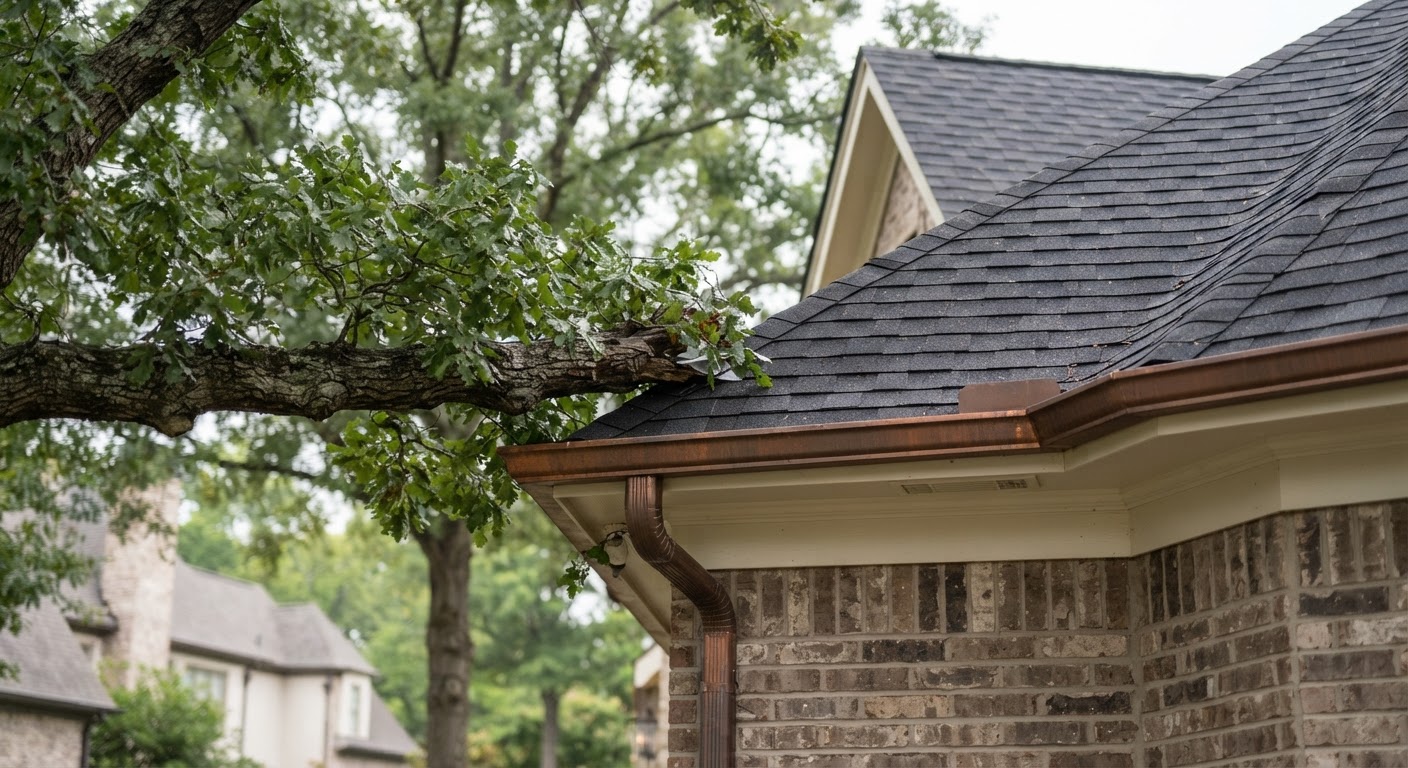
The Intersect of Brentwood's Natural Canopy and Rodent Behavior
Brentwood is well known for its rolling hills, mature hardwood canopies, and spacious, wooded residential parcels. Decades-old oaks, maples, and hickories lend privacy and beauty to local neighborhoods, but they also foster a rich ecosystem right outside the window. While many homeowners recognize that wooded settings attract wildlife like deer and songbirds, these elevated environments also provide the perfect habitat for roof rats (Rattus rattus).
Unlike Norway rats, which prefer to burrow underground or enter structures through foundations, roof rats are agile climbers that spend the majority of their lives elevated above the soil. In heavily treed areas, residential rooflines sit directly within the natural foraging and travel territory of these pests. Understanding the relationship between property landscaping and elevated rodent activity is the first step toward keeping your home secure.
Understanding Roof Rat Biology and Movement
Roof rats are uniquely adapted for vertical movement. They possess slender, streamlined bodies, large ears, pointed noses, and tails that are longer than their combined head and body length. That long tail serves as an essential counterweight, enabling them to balance across narrow utility lines, fence rails, and tree branches with remarkable speed.
In the wild, roof rats nest in tall shrubs, dense ivy, and high tree canopies. However, human habitations offer an enticing combination of warmth, shelter from predators, and consistent food sources. When mature tree branches grow within a few feet of an attic, eaves, or dormer, roof rats do not view the house as an obstacle—they view it as an extension of their natural canopy.
Why Ground-Level Defense Isn't Enough
Many traditional rodent management plans focus heavily on ground-level vulnerabilities, such as garage door sweeps, crawlspace vents, and foundation gaps. While ground-level exclusion is important for mice and burrowing rodents, it completely misses the primary pathways used by roof rats. A homeowner might maintain a pristine foundation perimeter while roof rats travel ten to twenty feet in the air, bypassing every ground trap and bait station to enter the home unnoticed through the attic.
How Tree Overhangs Become Rodent Highways
A mature tree canopy that extends over a roofline creates a sheltered, predator-free corridor directly to the weakest structural points of a house. When branches touch or hover near a roof, rodents gain easy access to several critical building components:
- Gutters and Fascia Boards: Tree branches often deposit leaves and organic debris into gutters. Roof rats use accumulated gutter debris for cover while searching for rotted spots behind fascia boards, where water damage softens wood and makes gnawing easy.
- Soffit Vents and Overhangs: Perforated vinyl, aluminum, or wooden soffits can warp or come loose over time. A roof rat can squeeze through an opening roughly the size of a quarter (approximately half an inch) and slip directly into the attic envelope.
- Gable and Ridge Vents: Elevated vents allow heat and moisture to escape the home, but roof rats are drawn to the rising warm air during cooler months. Plastic ridge caps and thin mesh gable screens are easily chewed through if rats have a stable landing platform nearby.
- Roof Junctions and Flashing: Architectural details such as valley junctions, dormers, and chimney abutments often leave minor gaps beneath flashing or tiles. Agility allows roof rats to explore these complex roof angles thoroughly.
Identifying Signs of Elevated Rodent Activity
Because roof rats operate high off the ground and are strictly nocturnal, infestations can become established long before a homeowner physically spots a rodent. Detecting their presence requires paying attention to subtle acoustic and structural signs:
- Noises in Ceilings and Upper Walls: Pattering, scurrying, or light scratching sounds in the attic or ceiling joists late at night are prime indicators of roof rats. Because they are active after midnight, these sounds are often heard when the rest of the household is quiet.
- Rub Marks (Sebum Trails): Roof rats secrete natural oils from their coats. As they repeatedly travel along the same rafters, beams, trim boards, or pipe chases, they leave behind dark, greasy smudge marks.
- Elevated Droppings: Roof rat droppings are oblong, spindle-shaped with pointed ends, measuring roughly one-third to one-half inch long. Finding these droppings scattered on attic insulation, along high shelving, or inside gutter troughs indicates an arboreal presence.
- Nesting Material and Damaged Insulation: In the attic, roof rats compress and shred fiberglass or cellulose insulation to form nests. They may also gnaw on stored cardboard boxes, seasonal decorations, and protective wiring sheaths.
- Gnawed Wires and Wood: Like all rodents, roof rats must gnaw continuously to keep their open-rooted incisors worn down. Chewed structural framing, PVC pipe lines, and electrical wiring pose serious fire and water damage hazards.
Landscaping and Exclusion Strategies for Wooded Lots
Managing roof rat activity requires an integrated strategy that addresses both property grounds and home architecture. Homeowners on wooded lots can significantly reduce pressure by taking deliberate management steps.
Canopy Management and Tree Trimming
The most immediate deterrent to elevated rodent access is eliminating physical jump points:
- Maintain a Clear Buffer: Trim all tree branches, limb canopies, and large shrubs at least six to eight feet away from the roofline, gutters, and exterior walls. Roof rats can jump horizontally up to four feet, so an eight-foot buffer creates an effective natural barrier.
- Thin Dense Climbing Vegetation: English ivy, wisteria, and creeping fig that scale brick or stone siding act as living ladders. Strip climbing vines away from exterior walls and keep ground covers pruned back from foundation walls.
- Manage Fruit and Nut Yields: Trees producing acorns, walnuts, or ornamental fruit provide high-calorie meals. Regularly rake and dispose of fallen mast crops to avoid drawing roof rat colonies toward your property.
Physical Exclusion Along the Roofline
Even with trimmed trees, rodents can sometimes utilize utility service drops or downspouts to reach the upper sections of a house. Physical exclusion seals the structural vulnerabilities that trees allow them to exploit:
- Heavy-Gauge Hardware Cloth: Replace flimsy plastic or standard insect screen on gable vents, soffits, and foundation vents with galvanized, quarter-inch hardware cloth.
- Metal Flashing on Eaves: Install drip edges and galvanized metal flashing beneath roofline shingles to protect soft fascia and prevent rats from chewing through wood decking.
- Gutter Guards: Installing durable, micro-mesh gutter guards prevents rats from using gutter troughs as hidden travel paths, while also keeping organic debris from accumulating.
- Seal Utility Penetrations: Caulk or seal exterior openings where air conditioning lines, satellite cables, or plumbing vents enter siding or roof surfaces, using a combination of stainless steel mesh and silicone-based sealant.
Professional Management for Elevated Rodents
Because roof rats live and nest at heights, DIY trapping efforts on the ground rarely resolve an active roof rat problem. Working on ladders, navigating high roof pitches, and maneuvering through attic rafters also introduces real safety risks. A comprehensive rodent management strategy combines detailed roofline inspections, strategic attic trapping, and targeted exterior exclusion to stop the cycle of entry permanently.
Protect your wooded Brentwood property from elevated pests with an inspection from Granite Finch Pest Control. Our rodent control specialists evaluate your roofline, identify hidden vulnerabilities, and implement lasting solutions to keep your attic and living spaces secure.
Need help from Granite Finch Pest Control?
Contact our team to discuss your service needs in Brentwood and surrounding service areas.